Guilt After Baby Number Two
By Jen Kost, MSW, LCSW, PMH-C
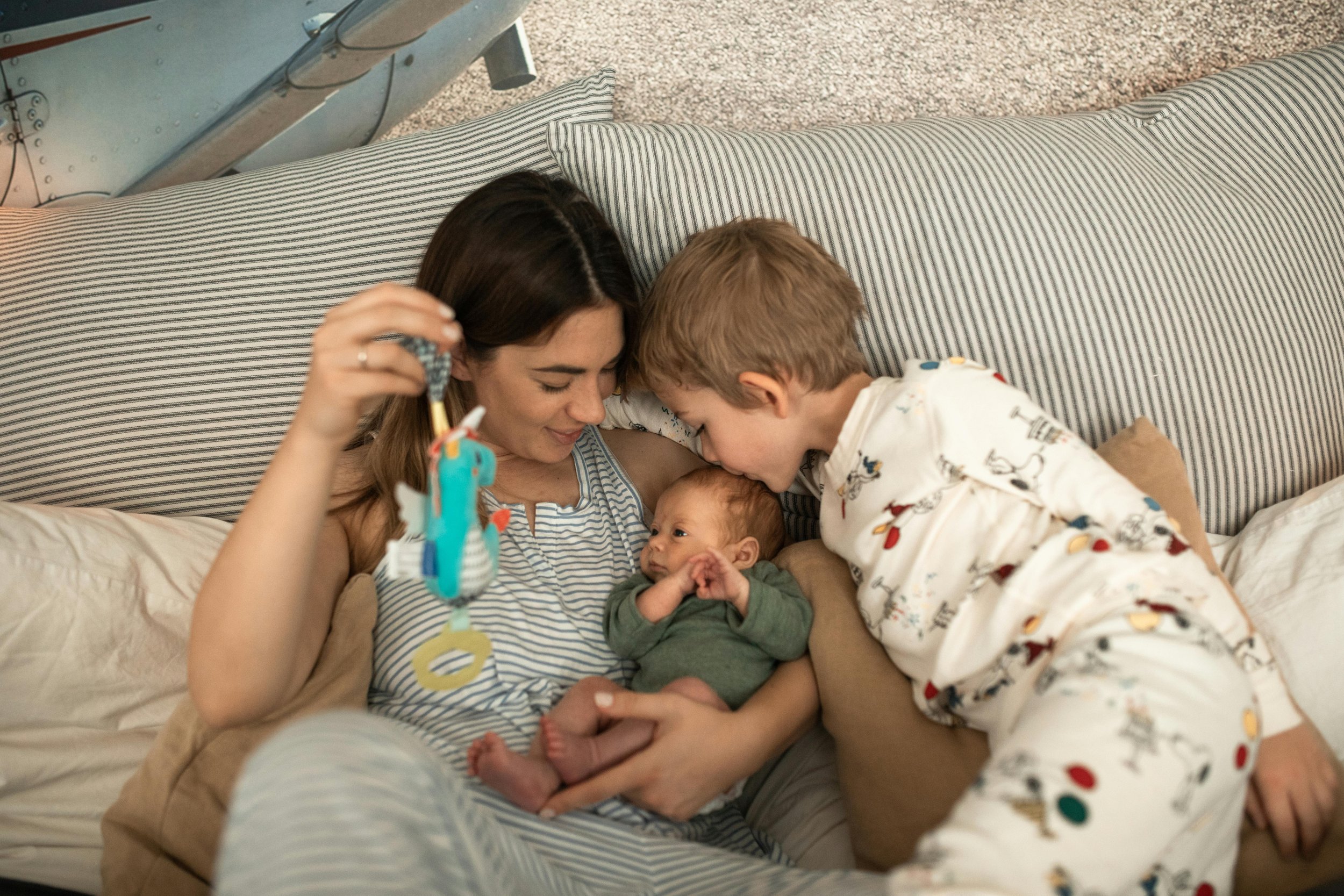
Guilt often shows up quietly after the birth of a second child. It can sound like worry about divided attention, fear of missing important moments, or concern that the depth of attunement offered to a first baby cannot possibly be replicated. Many parents notice an ache when an older child asks for help at the exact moment a newborn needs feeding, or when exhaustion shortens patience. This guilt is not a sign of failure. It is a sign of care.
Parenting a first child often allows for sustained focus. Time stretches differently. There may be long stretches of eye contact, slower mornings, and the feeling of organizing life around one small person. When a second baby arrives, the structure of parenting changes. Attention becomes shared. Time becomes more fragmented. This shift can feel like loss even as love expands.
A common misconception is that good parenting requires equal distribution of time and energy. In reality, parenting has always required responsiveness rather than symmetry. A newborn needs physical closeness and regulation. An older child needs reassurance, predictability, and a sense of continued belonging. These needs are different, not competing. Meeting them looks different too.
Attunement is often misunderstood as constant presence. Attunement is about repair, responsiveness, and emotional availability over time. A parent who cannot respond immediately but returns with warmth and curiosity is still building secure connection. In fact, experiencing small moments of waiting and repair helps children learn resilience, flexibility, and trust in relationships.
There is also grief embedded in this transition. Grief for the version of parenting that allowed uninterrupted time. Grief for the identity of being a parent to only one child. Grief for the fantasy that everything could feel calm and intentional at all times. Making room for this grief allows guilt to soften. Both can coexist with love.
Another important reframe is recognizing what subsequent children gain rather than what is lost. A second baby is born into a family that already knows how to love, adapt, and survive hard moments. They are held by more than one relationship. Over time, siblings offer models of connection, conflict, and repair that parents could never fully teach alone. These relational experiences shape emotional development in powerful ways.
Parenting responsibilities also shift as children grow. The intensity of newborn care decreases. The older child gains independence and competence. The second child benefits from a parent who has lived experience and deeper self knowledge. Parenting becomes less about perfection and more about presence across seasons.
Guilt often asks a deeper question. Am I enough for both of them. The answer is not found in doing everything right. It is found in showing up again and again, even imperfectly. Children do not need undivided parents. They need parents who return, repair, and remain emotionally available.
Feeling guilt after baby number two does not mean something has gone wrong. It means a transition is unfolding. With time, reflection, and self compassion, many parents find that what once felt like division begins to feel like expansion.