The Power of "And" for Couples
By Elle Murphy, MSW, LSW
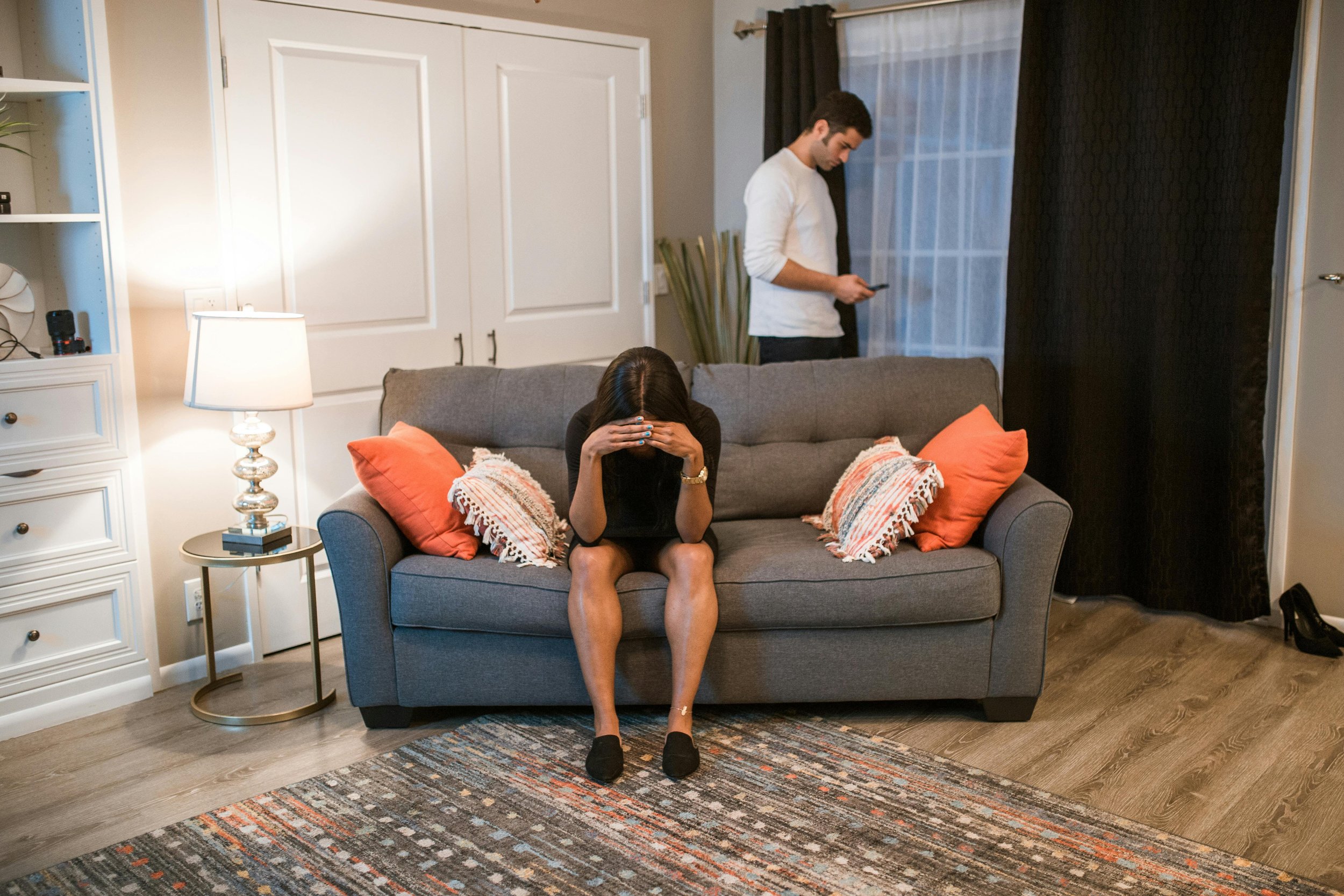
During the perinatal period, a couple’s relationship goes through a big shift. With new stressors and less time for connection, it can feel like you are sitting in the same room as your partner and feel miles apart. During moments of connection, couples often use a word that might seem simple, but carries a heavy meaning, “but”.
"I love our baby, but I'm overwhelmed." "I want to do more, but I don’t know how." "I know you're doing your best, but I need you to do more."
That tiny word, but, erases everything that came before it. It tells us that only one thing can be true at a time.
The Shift "And" Creates
When a couple can replace "but" with "and," something shifts. The tension doesn't disappear; it becomes a space where two truths can exist at the same time.
"I love our baby, and I'm exhausted." "I want to do more, and I don’t know how." "I know you're doing your best, and I need you to do more."
Suddenly, they’re not choosing who’s right or wrong. They’re acknowledging that both can coexist. In the perinatal period, this matters because everything about this transition exists in a paradox.
The Perinatal Paradox
You can be:
Deeply in love with your baby and grieving your former life
Grateful for your partner and resentful of the inequity you feel in your household
Feeling more loved than ever and lonelier than you've ever been
Proud of your body and struggling with how it's changed
Excited about the future and terrified for it
Parents believe they should feel one way and when they don't, they think something is wrong with them or their relationship. The "but" emerges as an apology for being human.
"I should be happy about becoming a parent, but I feel overwhelmed." As if the overwhelm invalidates the happiness, or worse, makes them a bad parent.
"I want to help more, but I don't know what to do." As if their willingness is canceled out by their uncertainty.
“And” Creates Permission
Permission to be complex. Permission to be human. Permission to hold two feelings, without judgment. Permission to acknowledge that their partner's struggle does not negate their own.
Here’s a conversation that can come up during early postpartum when one parent is on paternity leave and one parent is not.
"I'm doing everything for the house and baby." "Well, I'm working full-time."
Both statements feel like weapons. Each partner is defending their contribution while often unknowingly, dismissing the other's experience.
With "and," we might get to:
"You're working full-time and managing a lot outside the home, and I'm doing most of the household task and I need more support, we need to figure out a better approach”
Every truth gets space. No one's experience erases another's. A shift from "who is right" to "these are my feelings, how do we navigate this time together?" It transforms the moment to collaboration. .
The Impact of “but” on the Nervous System
When someone hears "but" after a statement, their nervous system registers it as negation. When someone tells us, "I hear you, but..." your body braces for dismissal or criticism.
"And" signals addition rather than negation. When we use "and," we're creating moments of co-regulation. We're telling our nervous systems: there's room here for all of it.
Noticing “but” And “and” in our Daily Life
I invite you to try this. For one week, notice when "but" shows up in conversations. What would happen if you replaced it with "and"?
You might find that:
Your partner responds differently when they don't feel negated
You can hold space for your own complexity without self-judgment
Conflicts become less about winning and more about understanding
You both feel more seen in your complex human experience
The perinatal period asks a lot of us. It asks us to become different versions of ourselves while staying connected to our transformation. Requiring us to give from reserves we didn't know we had. There is enough room for all the complicated, beautiful pieces of this journey.
We can be tired and grateful. Struggling and committed. Changed and still ourselves.