Lessons from Queer Parents
By Rachel Beredjick-Ray, MSW, LCSW
A note on language: in this blog, I use “queer” as an umbrella term that is meant to include the vast expanse of sexual orientations and gender identities that are not heterosexual and/or not cisgender.
This Pride Month, I have been reflecting on the many ways that queerness and queer people writ large have enriched my relationship to myself and the world. To me, queerness looks beyond what the world is to see what it can be. It is inherently norm-breaking, expansive, and creative with the end-goal of truth, authenticity, and freedom to shape the life of your choosing.
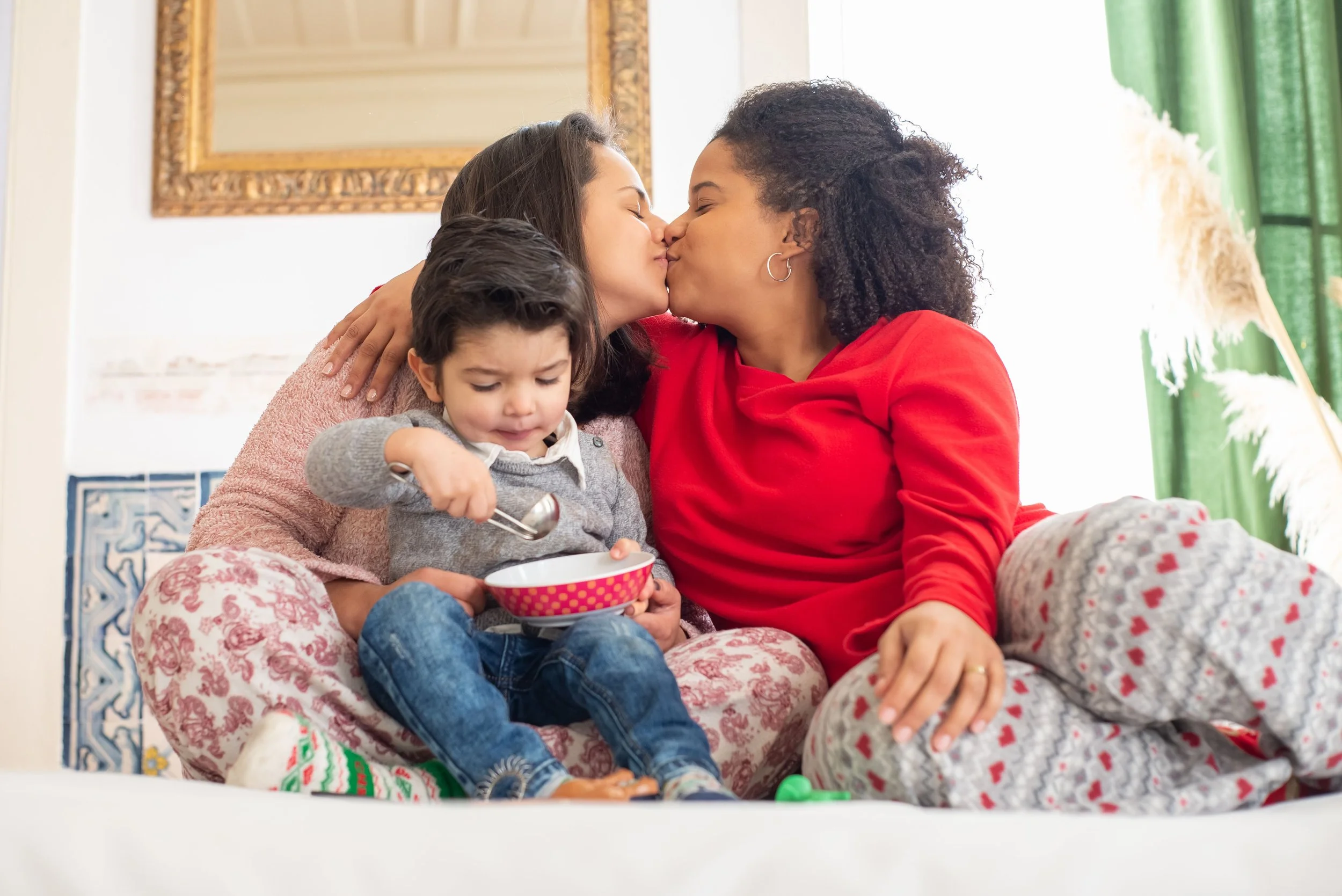
As a perinatal therapist and doula, I’ve been lucky enough to work alongside queer people who have embarked on the tumultuous and joyous journey of parenthood, and I have seen the ways that their approach to parenting has been undoubtedly shaped by their queer identities. These parents have been teachers to me (probably without realizing!) and have opened my eyes to the ways in which the dominant cultural narratives around parenting fall short for us all.
Here are some of the lessons that have stuck with me most:
Unequal mental load doesn’t have to be a reality of parenting.
A pervasive challenge in many heterosexual parenting relationships is the unequal mental load placed on mothers. Mental load includes the planning, strategizing, and organizing work of childcare and family management, and on average women hold over 70% of these tasks. The unseen burden of this mental load can lead to burnout, resentment, and high stress during an already demanding time. Naturally, in queer relationships that don’t have a cisgender mother and father makeup, a more thoughtful approach to family workload and childcare division is required. In the absence of gender-based norms, decisions about who handles which household/family management task can be determined by capacity, skillset, and equity. While it may seem simple, the reality is quite groundbreaking in its impact on how all types of parenting relationships could be, if more critically examined.
Gender does not always determine the physical role the parent plays.
Queer and trans parents show us every day that they can play an active role in any aspect of parenting, despite what stories are told about who does what in parenting relationships. This extends to the physical aspects of parenting, including pregnancy, childbirth, and feeding your child with your body. For example, many trans dads or nonbinary parents choose to become the gestational parent of their child and carry a pregnancy. Others are adoptive parents or nongestational parents who take steps to induce lactation so that they can feed their babies with the power of their bodies, sometimes to better share the load with their gestational parent partner. Despite challenges like systemic barriers to gender affirming perinatal care and gender dysphoria, queer folks continue to shape and fulfill their own parenting destiny in ways that transcend our world’s expectations.
Community is essential to the parenting experience.
Parenting can be incredibly demanding and often feel like more than a 1, 2, or even 3 person job! The presence of a community of people to support parents both practically and emotionally can significantly reduce stress and overwhelm and allow them to have more capacity to connect with and enjoy their child. It has become more and more common to move from hometowns and settle down away from family which can make this type of community feel less accessible. And for many of us, queer or not, our families of origin are not always the people in our lives that make us feel the most safe, cared for, and accepted. “Chosen family,” the idea that you can decide to build families and communities of support with loved ones of your choosing, who share your values and bring you joy, has been a hallmark of the queer community throughout history. This legacy of collective care exists in many queer spaces and models a network of support that all parents could benefit from cultivating.
You make the rules!
While so much of the discourse around queer people in the perinatal space can focus on the systemic and cultural barriers that they face - a critical step in eliminating said barriers - there is so much to celebrate and elevate when it comes to the ways queer people are thriving as parents. Queer parents remind us that we do not have to accept parenting norms that don’t serve us or our relationships. We get to make the rules! In creating a family, we are given the opportunity to create a reality that centers our joy, dignity, and well-being, above all. Simply by being themselves, queer parents make us all more free to be the parents we want to be.