Forgotten
By Abby Waychoff OTR/L, RYT, PMH-C
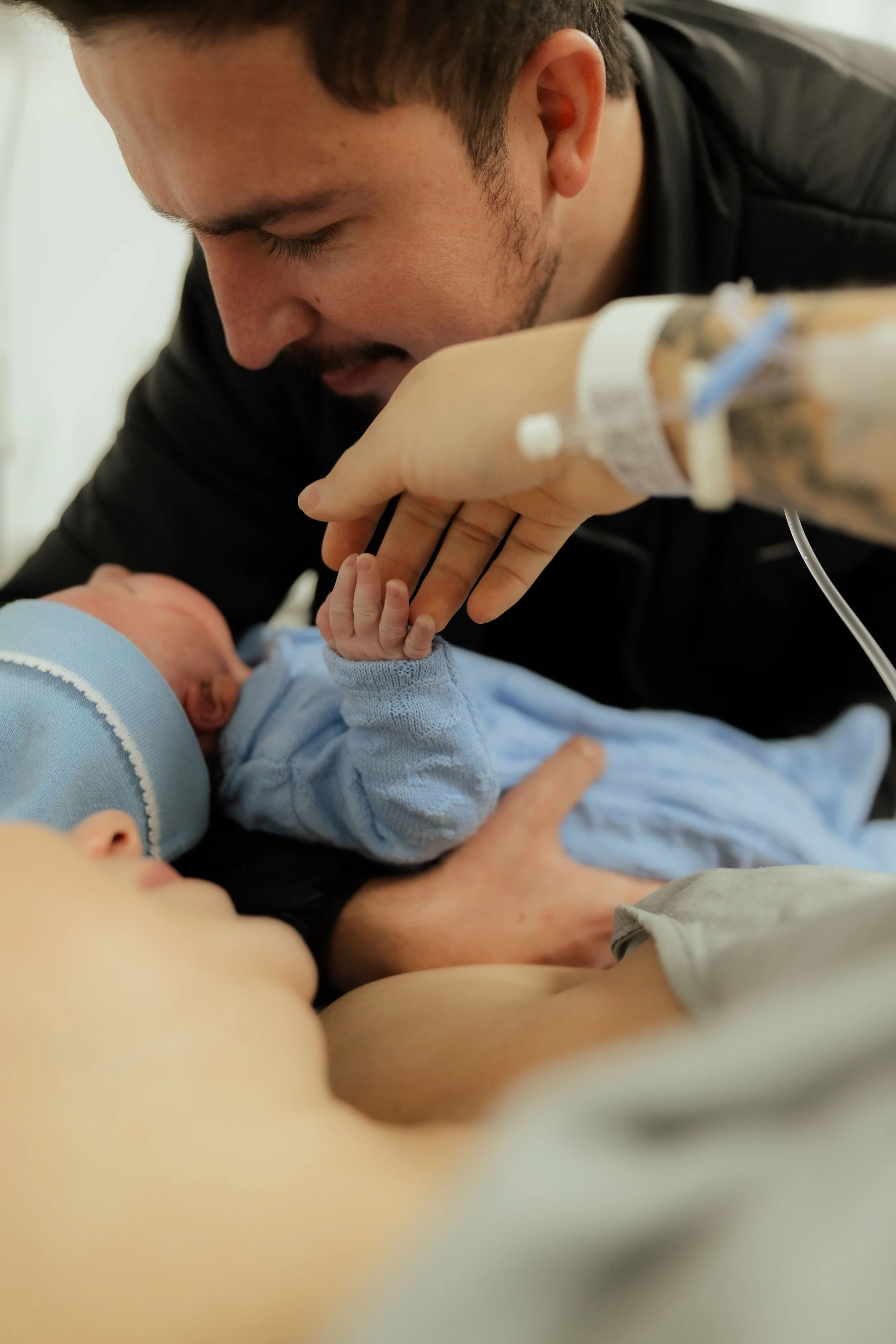
There is a particular kind of loneliness that can come with becoming a parent, one that can be difficult to explain because, from the outside, you are surrounded by people. People are checking in. People are bringing food. People are visiting the baby. People are marveling at this tiny new person you have brought into the world.
And yet, somehow, you can feel completely unseen.
This can be one of the hardest parts of early parenthood to put into words. Everyone is understandably captivated by the baby, but somewhere in the midst of becoming a parent, the person who gave birth can almost disappear. Their needs become secondary. Their exhaustion becomes expected. Their pain can become background noise. And the person everyone came to see is suddenly the person no one is really asking about.
I wrote the following piece when I was a brand-new mom. Reading it now, years later, I can see how much I was trying to make sense of that feeling, to understand how I could be so deeply loved, so completely in awe of my baby, and still feel so alone.
As mentioned in my previous blog post, I will be sharing some of my old writing from those early years of motherhood. I think hearing the voice of other mothers who have walked a similar path is valuable and reminds us that we are never as alone as we may feel.
This one is called Forgotten.
“Pregnancy adorns expecting parents with a kind of mythical cloak; a thing that sets us apart from our fetus-less peers and places us on a pedestal of admiration. We are warriors, inspiring awe as we glow with potential life. As our bellies grow, we are stopped on the street and stared at from a distance. We represent the wonder of life, and with that comes a special kind of visibility. Those close to us check in regularly, and those less close approach us more often. It is (roughly) 40 weeks of excitement and anticipation, with mothers as the focus and concern.
Then we give birth.
We labor for hours, we push for hours, we moan, we scream, we tear, we break, and at the end of it all we bring forth new life.
And we are forgotten.
The arrival of our babies is miraculous and remains, and always will remain, one of life’s greatest wonders. I marvel at this process every time I gaze down at my growing son, so it is no wonder that friends and family turn their focus to these new little miracles. However, the swiftness and finality of this shift in focus, though unintentional, is both shocking and painful.
My own experience of giving birth left me feeling overwhelmed with love but physically and mentally broken. The exhaustion from being up for over 48 hours, going through a kind of pain that is wildly indescribable for 20 of those hours, and having my “plan” completely obliterated by nature was crushing. I was in love with my son but was utterly disoriented by how he got there. As I lay in my hospital bed the following day, I watched my family across the room as they gathered around my husband as he held our beautiful baby boy. The memory is blurry from pain medication and exhaustion, but I remember the feeling of being alone, with the ache of wanting someone to come lie with me in that bed. To hold me, let me cry, and tell me it was all going to be okay.
But babies are miracles. And I too was forgotten.”
As we continue on our journeys, this reality of ever-present but ultimate invisibility persists. As visitors shuffle through to stare in awe at our frighteningly fragile, but beautiful newborns, it is easy to overlook the equally fragile and beautiful birthing parent as they sit on the couch in a 3-day-old sweatshirt, covered in spit-up with eyelids swollen and breasts engorged and leaking. It is easy, too, as those newborns grow and turn into toddlers, for those close to us to keep their eyes glued to the unfolding while we fade to the background unless it is to criticize our choices.
We are the foundations that hold up the family. As in real estate, those looking to buy turn their eyes to the color of the brick or the sweeping front lawn, but despite the façade, with a cracking foundation, the house is worthless. New parents need to be seen, to be visible, and their needs anticipated. After all, what is a structure without a foundation?
The next time you visit someone who has recently given birth, stop for a moment and look at the foundation. Pull your attention away from the new beautiful baby and turn your eyes to the person who brought forth this tiny miracle. In their eyes, see the immense love they have for their child. A love so new and so huge that it is terrifying; see their fear. See in their eyes the pain they have gone through and that they are likely still going through. Look at their eyes and see how disoriented they are. See how their world has turned upside down and, despite their happiness, see how wholly overwhelmed they are. See their vulnerability. And then, look directly in their eyes and say, “How are you doing? How are you REALLY doing?” And then, get to action.
Often, in those early days of parenthood, it's hard to even know what kind of help to ask for. “How can I help?” is a perfectly valid question to ask a new parent; however, it puts the onus on them to figure out what exactly to ask for help with. Here’s a list of support ideas to offer when visiting someone with a new baby that they can likely use:
Laundry: Offer to throw in a load or fold some that is sitting in waiting
Dishes: Notice if the sink is full and take care of it. Ask if there are bottles and/or pump parts to be washed. Check the dishwasher to see if it needs emptying.
Food: Offer to order groceries or prep a meal. Check whether the fridge needs to be cleaned out (think old delivery leftovers, expired salad dressings, etc.). Even better, show up with an easy-to-heat-up meal that the parents can use when they need it.
Pets: Take the dog for a walk, empty the litter box, fill the food bowls, play fetch and give them some extra love that they’re probably missing.
Plants: Water them! Throw out old, wilting congratulatory flowers and clean the vase. Pull some weeds or cut the grass.
Mail: Check the mailbox. Offer to drop off items at the post office. Help get a “clerical” to-do list done.
Siblings: Offer to take big brother or sister to the park, or hold the baby so they can spend quality time with their firstborn. Get them a snack or help with other daily tasks.
Something always gets put off when a new baby is added to the equation. Be observant and become the solution the family you’re visiting didn’t know they needed.