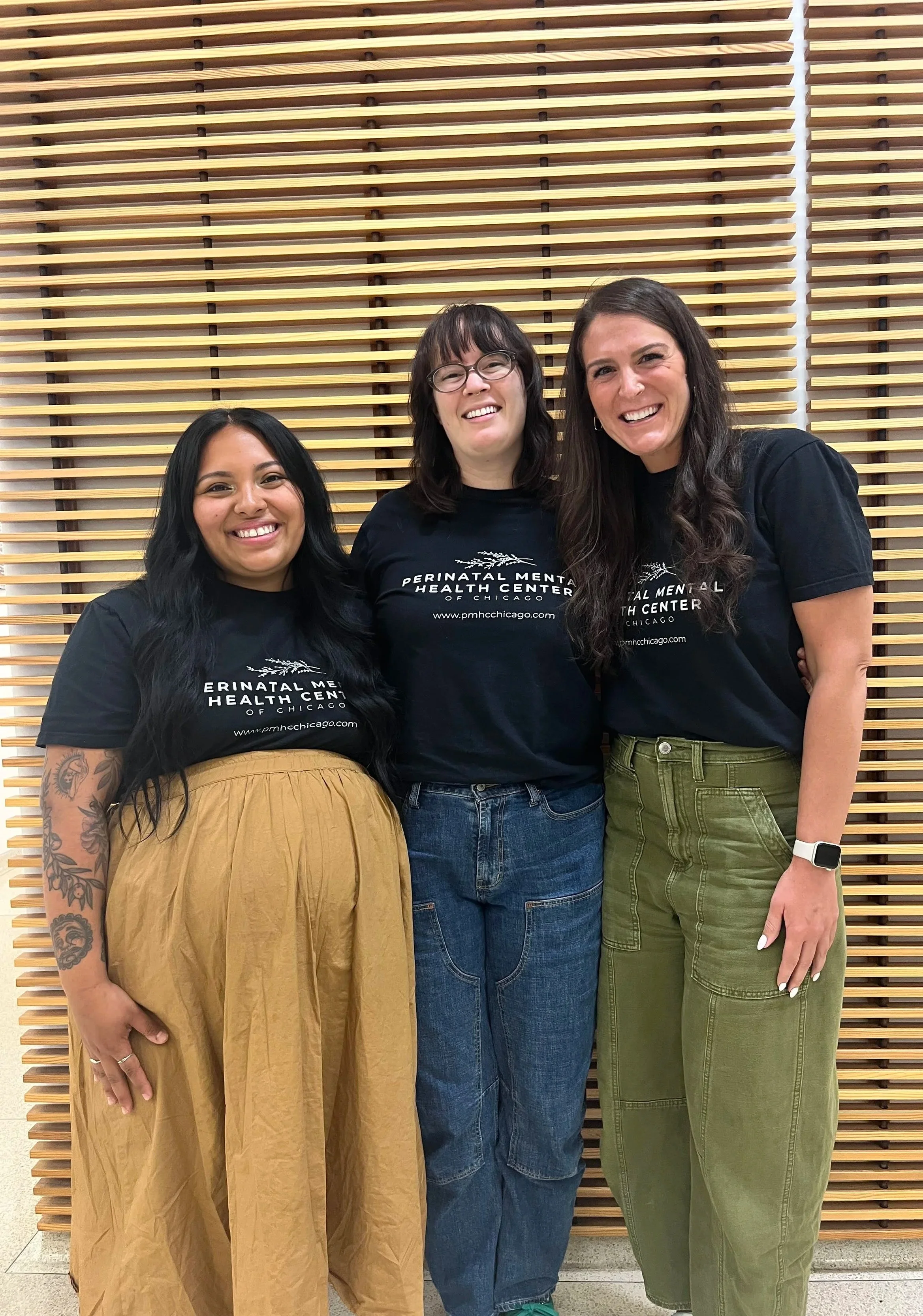
By Elle Murphy, MSW, LSW, PMH-C
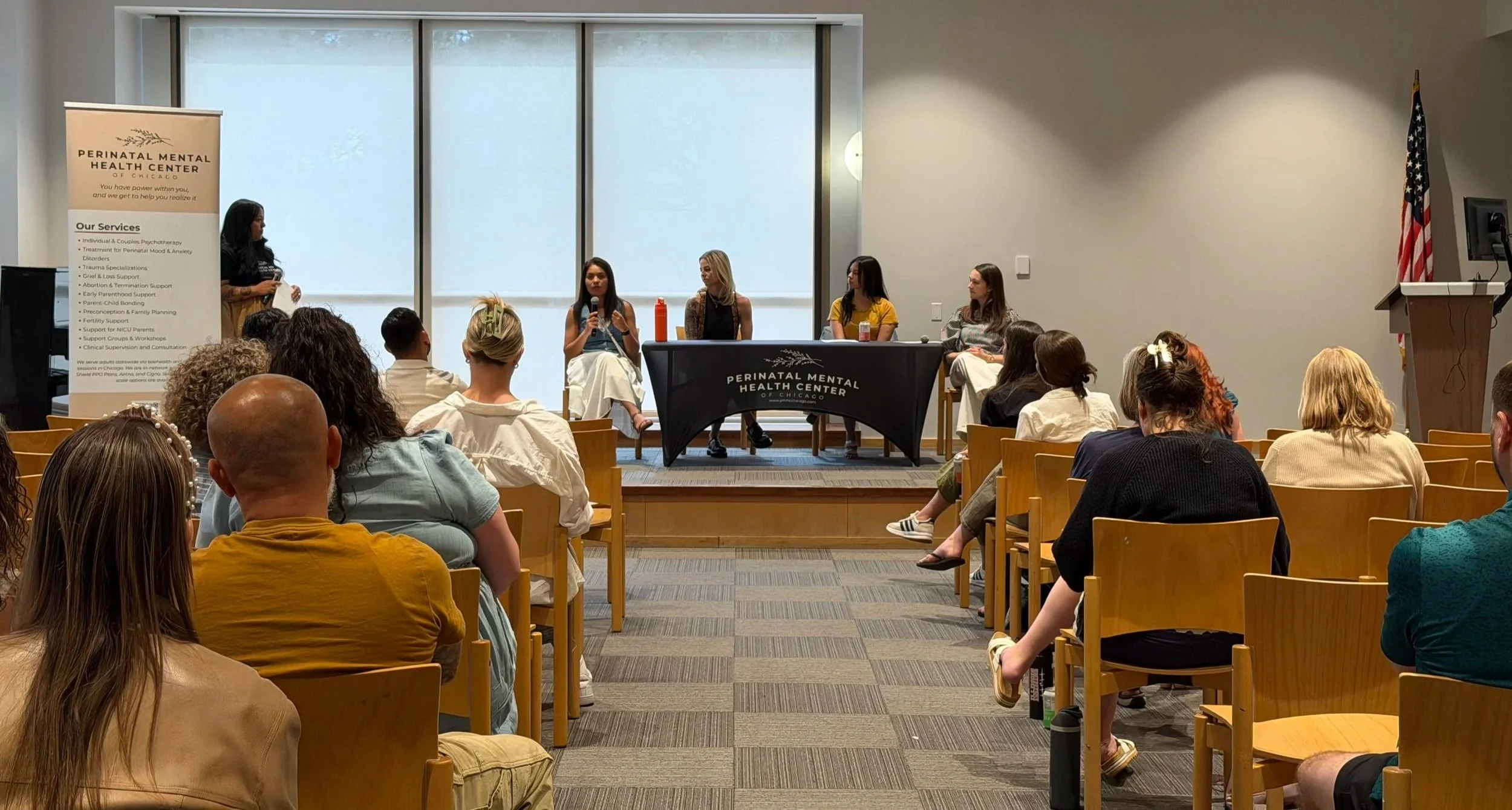
On May 30th, during Maternal Mental Health Month, Perinatal Mental Health Center of Chicago hosted a free community screening of More Than Blue, a groundbreaking documentary from Massachusetts General Hospital that illuminates the real faces of postpartum depression and perinatal mood and anxiety disorders (PMADs) across America.
Created by Harvard and Massachusetts General Hospital's Center for Women's Mental Health, More Than Blue pairs personal stories with expert insights to raise awareness, reduce stigma, and ensure mothers receive the care they deserve. While screening rates for PMADs have improved over the past decade, most individuals experiencing postpartum depression, anxiety, or psychosis still go undiagnosed or untreated. This film and this event was a call to action to do better.
The idea to host a community screening was conceived in November 2025. Over six months, 200+ emails, and countless planning hours later, it happened and the room was full of bravery. Attendees sat with discomfort, reflected on the journeys they may be carrying, and engaged openly with some of the most important topics in perinatal care: substance use, infant-parent attachment, systemic and racial disparities, birth trauma, community support, and advocacy.
Featured Speaker
Before the panel discussion, attendees were treated to an illuminating talk that set the tone for the entire afternoon.
Dr. Sophia Peng, MD she/her
Hospital Medicine & Addiction Medicine Physician · Assistant Professor of Medicine and Psychiatry and Behavioral Health Sciences, Rush University Medical Center
Dr. Sophia Peng is a hospital medicine and addiction medicine physician at Rush Hospital and an Assistant Professor of Medicine and Psychiatry and Behavioral Health Sciences at Rush University Medical Center. She delivered a talk on substance use in the perinatal period that was at once educational, inspiring, and deeply challenging. Her presentation brought into sharp focus just how harmful stigma remains for perinatal people navigating substance use and how a compassionate, evidence-informed approach changes outcomes. Dr. Peng reminded the room that stigma is not a neutral force; it is a barrier to care, and dismantling it is part of the clinical work.
Meet the Panelists
Following the film, four extraordinary perinatal professionals led a panel discussion on how we can better identify, support, and advocate for the families we serve. Their perspectives spanned midwifery, doula work, public health, psychotherapy and personal experience; a true cross-section of the village it takes.
Rae Proch she/her
MSN, CNM, IBCLC — Certified Nurse-Midwife, University of Chicago
Rae brings a whole-person lens to perinatal care. As a certified nurse-midwife at the University of Chicago, she provides reproductive, prenatal, birth, postpartum, gynecologic, and gender-affirming care; always rooted in the belief that mind, body, and spirit are inseparable throughout the perinatal journey.. Rae's presence on this panel grounded the conversation in the clinical realities of supporting patients through every stage of their perinatal experience.
Jessica Ekhoff she/her
JD, PMH-C — Psychotherapy Intern, Nurture Therapy · Author of Super Sad Unicorn
Jessica's story is one of radical transformation. After more than a decade practicing trademark and advertising law, a convergence of the pandemic, new motherhood, and her own serious postpartum mental health crisis compelled her to completely reimagine her path. She is now in her second year of a graduate social work program at the University of Chicago, training to become a maternal mental health therapist. She currently counsels women through all stages of their reproductive journeys as a psychotherapy intern at Nurture Therapy. Jessica is also the author of Super Sad Unicorn, a memoir about her experience with postpartum psychosis. Jessica is actually a featured story in the film and a former Perinatal Mental Health Center of Chicago intern. Her willingness to speak openly about psychosis was a powerful and necessary thread in the panel's conversation.
Melissa Medina she/her
Doula, Parent Educator & Founder of Hands That Hold
Melissa came to this work from the community up. As a community-based doula, she witnessed firsthand the emotional and systemic challenges families face during pregnancy and postpartum. She went on to found Hands That Hold, a community-centered prenatal practice built to make support more accessible, personalized, and responsive to every family's needs. As a Medicaid provider, she actively works to expand access to care for underserved communities. Melissa brought the panel's conversation on racial disparities and systemic barriers to life through her lived and professional experience. As she puts it: it is our duty to build the village we continuously tell mothers they need.
Yesenia Arreola she/her/ella
LCSW, PMH-C — Perinatal Psychotherapist, Rush University Medical Center
With more than 15 years of experience providing trauma-responsive mental health services to children, adults, and families, Yesenia brings extraordinary depth to every room she enters. A bilingual (English/Spanish) Licensed Clinical Social Worker certified in Perinatal Mental Health, she currently serves at Rush University Medical Center, offering psychotherapy across the full perinatal period and weaving in themes of identity transitions, trauma, grief, parenting, and culturally responsive care. Yesenia's commitment to centering diverse communities and her expertise in systemic, family-centered care made her perspective invaluable to the afternoon's discussion on equity, access, and what truly healing-centered care looks like.
Why This Matters
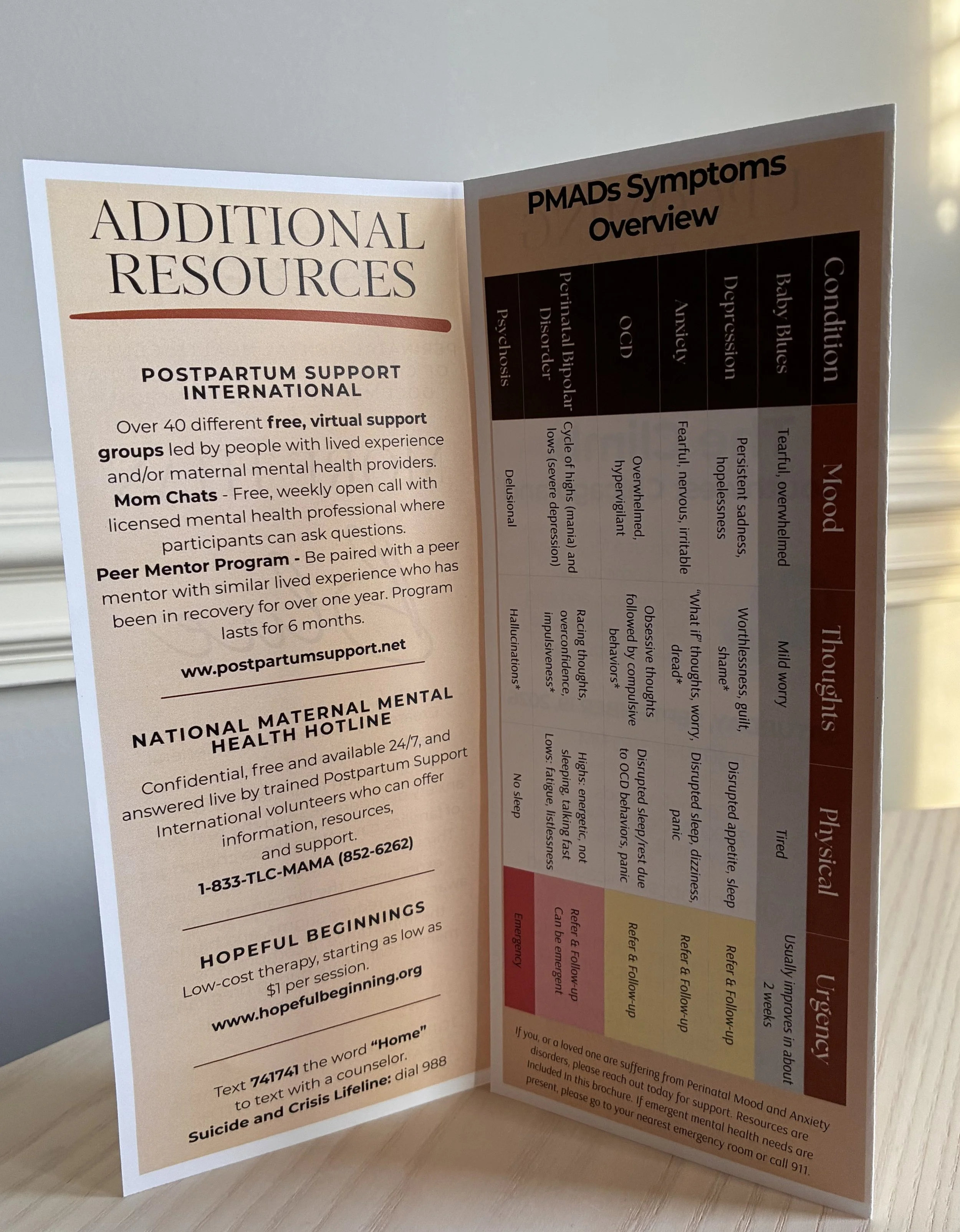
About 20% of perinatal people will experience a mood or anxiety disorder and yet the majority still go undiagnosed or untreated. Events like this one exist not just to raise awareness, but to model what a community that shows up looks like. Clinicians, advocates, families, and those in the perinatal period themselves gathered in one room to hold the weight of this issue together.
This event was free because access to this conversation should never be a privilege. Perinatal Mental Health Center of Chicago remains committed to making education, connection, and support available to every person in this community, regardless of circumstance.
Thank you to every attendee who showed up with openness. Thank you to Harvard and MGH's Center for Women's Mental Health for creating this film. Thank you to the panelists, for the work they do every single day, and for giving their afternoon to a conversation that matters deeply.
You are more powerful than you know, we honor your story, your journey and we remind you that you are not alone. Help is available.